

Perth businesses operate under a compliance environment where equipment selection must align with the building’s fire risks, occupancy type, insurer expectations, local emergency planning, and ongoing maintenance obligations. In 2026, most compliance issues we see are not caused by a lack of intent, but by mismatched equipment (wrong type, wrong placement, missing signage) or incomplete inspection records. Choosing fire safety equipment in Perth starts with understanding what the site is required to protect, who is on the premises, and what must be documented over the life of the system.
1) Start with the building’s risk profile, not the product list
Compliance is risk-led. Our first decision point is always the site profile:
- Building classification & use: office, retail, warehouse, hospitality, healthcare, childcare, strata-managed commercial, or mixed-use.
- Fire load & ignition sources: kitchens, electrical switchboards, charging areas, plant rooms, flammable liquids, hot works.
- Occupant profile: staff-only, public access, after-hours occupancy, mobility considerations.
- Critical assets: server rooms, stock, hazardous materials, high-value equipment.
This prevents common errors such as selecting extinguishers that are unsuitable for the likely fire class, or under-specifying emergency lighting & exit signage for public-facing tenancies.
2) Map equipment to the fire classes & site hazards
A compliant setup typically combines multiple protection layers. The right mix depends on hazards present:
Portable fire extinguishers
We select extinguisher types that match the fire risks on site (for example, electrical areas, flammable liquids, general combustibles, or cooking oils). The goal is to ensure staff can respond to small, early-stage incidents without using the wrong agent.
Fire blankets
Often essential for food preparation areas & certain light-industrial settings. They are simple, but placement & accessibility matter.
Fire hose reels & hydrant systems
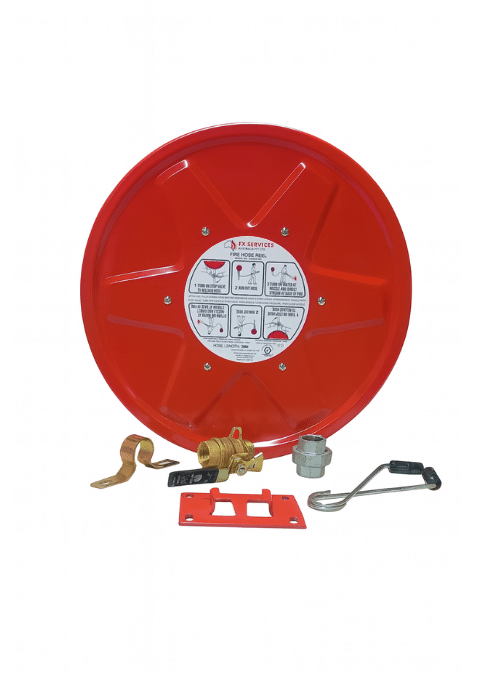
Common in larger facilities and higher-risk occupancies, where first-response water coverage is required. These systems must remain accessible, correctly signed, and routinely tested.
Emergency lighting & exit signs
These are frequently audited because they impact evacuation safety. We focus on visibility, coverage, battery condition, and test records.
Smoke alarms, detection & warning systems
Some premises require more advanced detection & occupant warning solutions. Where detection is installed, documentation, servicing, and compatibility of components become as important as the hardware itself.
Fire doors, passive protection & egress controls
Passive fire protection is where many sites fail inspections—wedged doors, damaged seals, or unapproved modifications can undermine the entire evacuation strategy.
3) Align to maintenance, testing & record-keeping expectations
Compliance does not stop at installation. In 2026, businesses are increasingly measured on evidence: inspection tags, test logs, service reports, and asset registers that show what was checked, when, by whom, and what was rectified.
Our practical approach is to choose equipment that can be maintained reliably across multiple years, with clear identification (serials/asset IDs), straightforward servicing, and readily available replacements. This matters for multi-site operators, franchises, strata-managed tenancies, and facilities with regular fitout changes.
Key documentation we prioritise includes:
- Site fire equipment register (with locations)
- Inspection & maintenance reports
- Test records for emergency lighting, alarms & pumps (where applicable)
- Replacement history & non-conformance rectification notes
- Staff induction notes that confirm evacuation roles & extinguisher awareness (kept simple, but recorded)
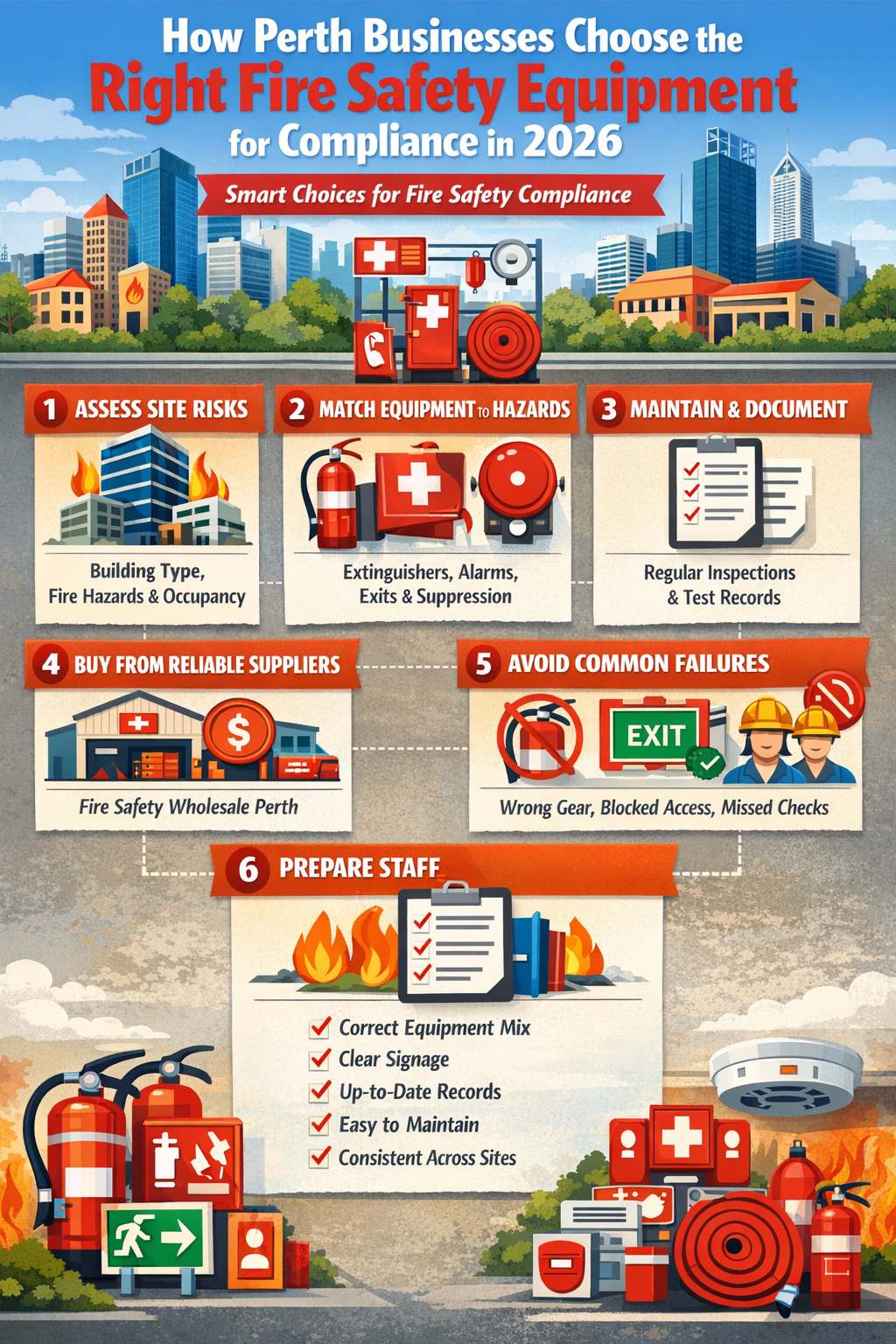
4) Make procurement decisions that support compliance, not just price
Budget matters, but procurement must also protect uptime, audit readiness, and continuity of supply. We see better outcomes when businesses purchase standardised equipment across sites, using consistent models, signage formats, and spare parts.
This is where fire safety wholesale Perth supply arrangements can reduce risk: fewer substitutions, predictable lead times, and consistent compliance labelling across replenishment orders. It also helps when urgent replacements are needed after discharge, damage, or an inspection notice.
5) Choose suppliers who can support audits, not only sales
When evaluating suppliers, we look for evidence that the supplier understands commercial compliance expectations, can supply compliant products with appropriate markings/documentation, and can support ongoing needs (replacement parts, compatible refills, signage updates). For many organisations, consolidating purchasing through fire safety wholesale Perth channels also improves traceability, because invoices, batch details, and product specifications are easier to retrieve during audits or insurer queries.
6) Avoid common compliance failures we see across Perth sites
These issues are preventable and often flagged during inspections:
- Wrong extinguisher type for the hazard (especially electrical areas & cooking risks)
- Blocked access to extinguishers, hose reels, exits, or panels
- Missing or inconsistent signage, including outdated evacuation diagrams after fitouts
- Overdue inspections or incomplete tags/records
- Non-compliant modifications to fire doors or egress pathways
- “Set & forget” purchasing, where equipment is bought once but not integrated into an asset register or service schedule
7) A practical selection checklist for 2026
Before finalising a purchase list, we confirm:
- The site hazards & likely fire classes are clearly identified
- The equipment mix matches occupancy & operational use
- Locations are accessible, visible, and won’t be blocked by stock or furniture
- Signage & evacuation information reflects the current layout
- The business can maintain the system on schedule, with records retained
- Procurement supports consistency across sites & replacements are readily available
Summary
In 2026, compliance outcomes in Perth are driven by fit-for-purpose selection, consistent procurement, and evidence-based maintenance. When we treat equipment as a managed compliance asset—rather than a one-time purchase—businesses reduce inspection issues, improve staff readiness, and protect continuity of operations. If we need an audit-ready baseline, we start with a risk-led equipment mix, confirm documentation requirements, then standardise purchasing & servicing for long-term compliance with fire safety equipment Perth expectations.
