

Ensuring compliance with fire safety regulations is a critical responsibility for every Australian workplace. Among the most overlooked but essential requirements are mandatory fire safety signs, which provide clear directions in the event of an emergency. Exit signs, extinguisher identification signs, and correct placement all play a crucial role in protecting employees, visitors, and contractors. When properly installed and maintained, these signs reduce confusion, speed up emergency response, and support workplace safety audits.
Why Fire Safety Signs Are Legally Required
Australian Standards, including AS 1319 for safety signs and AS 2293 for emergency escape lighting and exit signs, mandate the use of fire safety signs across commercial and industrial environments. These regulations exist to ensure that every person inside a workplace can quickly locate emergency exits and fire-fighting equipment.
Compliance is more than just a box to tick. Inadequate signage may expose business owners to liability if staff or visitors are injured due to poor visibility of exits or fire equipment. Safe Work Australia also makes it clear that businesses must provide adequate information, training, and supervision to ensure workplace safety — and signage is part of that responsibility. In addition, insurance policies may be compromised if it is found that fire safety requirements were not fully met.
Exit Signs – Guiding Safe Evacuation
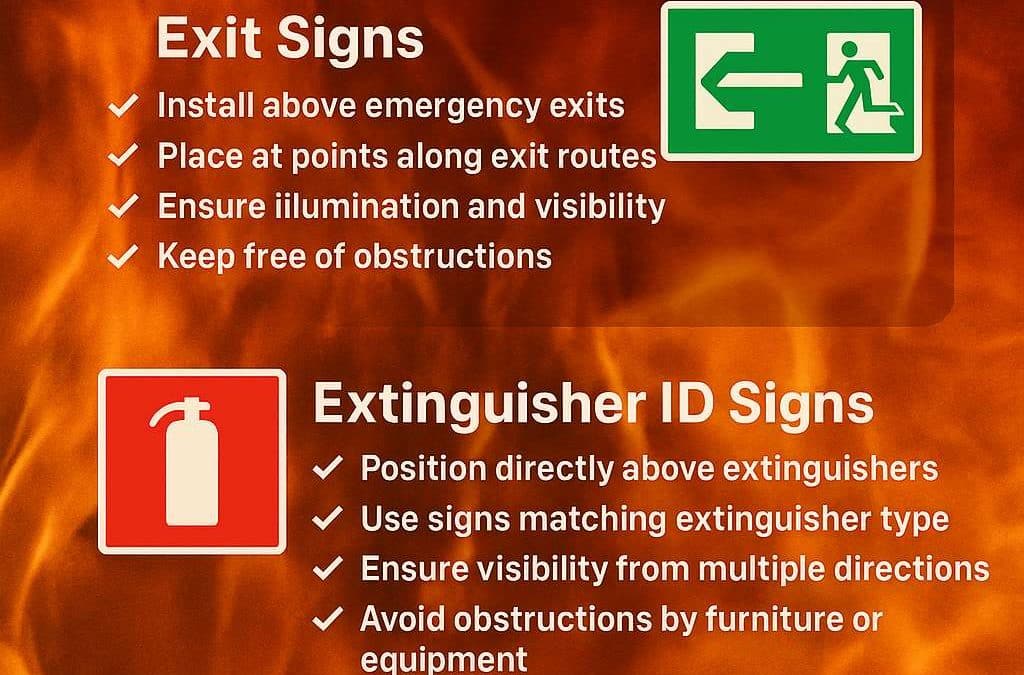
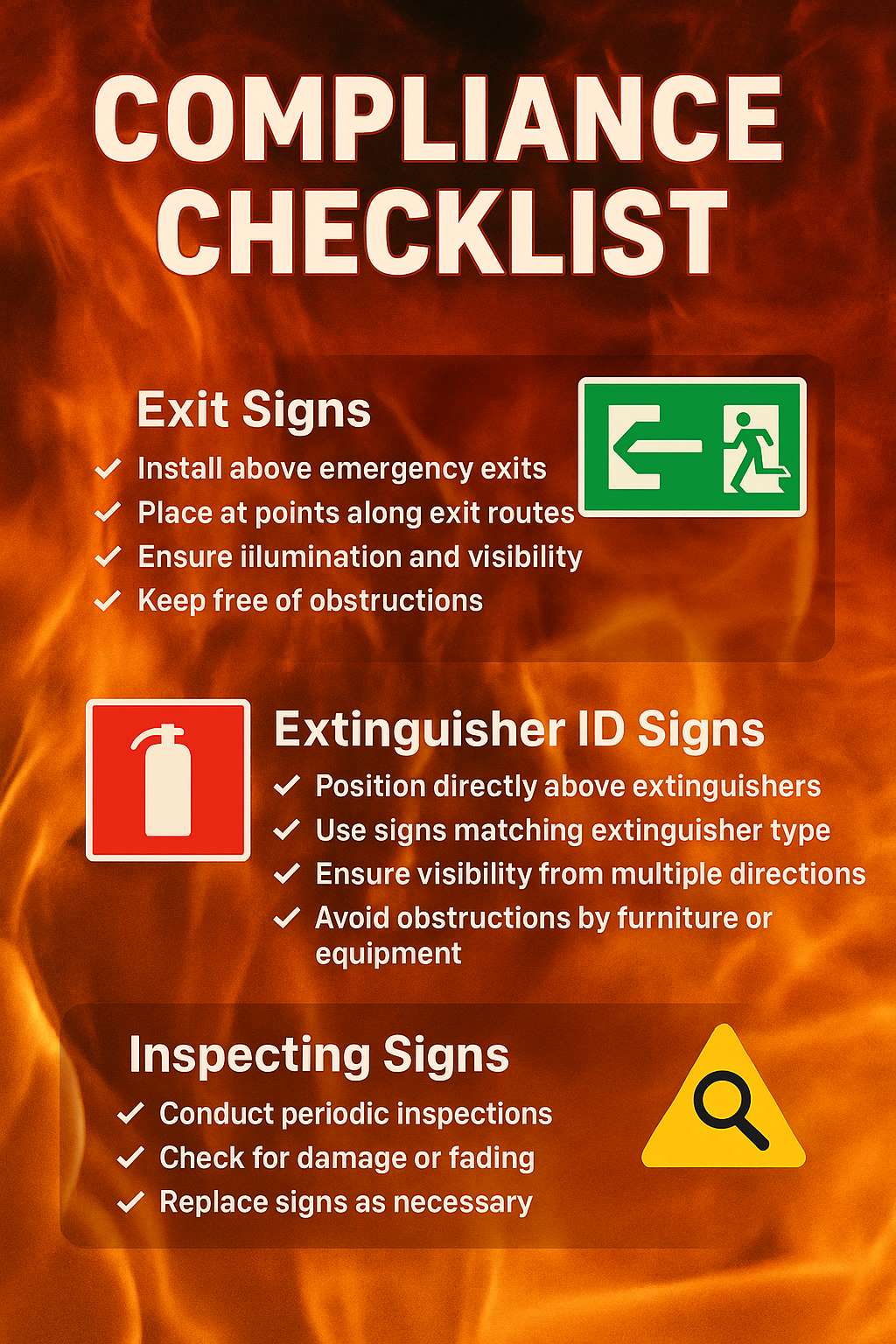
Exit signs must be illuminated, unobstructed, and placed above exit doors that lead to a safe path of escape. They should remain visible in all lighting conditions, which is why emergency lighting systems are often integrated.
In practice, this means ensuring exit signs are installed at every point where a decision must be made — such as stairways, corridors, and intersections within a building. For larger workplaces like warehouses, shopping centres, and multi-storey offices, signage may need to be positioned at intervals along long corridors to provide ongoing guidance. Employers should regularly test exit lighting systems to confirm that they function during a power outage, as emergencies often occur when normal lighting is unavailable.
Extinguisher Identification Signs – Fast Access to Equipment
Fire extinguishers are a first-response tool in containing small fires. However, during an emergency, visibility can be compromised by smoke, panic, or poor lighting. Extinguisher identification signs, placed above each unit, ensure that staff can locate them instantly, even from a distance. These signs must comply with standardised colours and symbols to maintain uniformity across workplaces.
Businesses should also ensure that signage is matched to the extinguisher type, as different extinguishers are designed for specific fire classes (for example, water, foam, CO2, or dry chemical). Training staff to recognise both the extinguisher and its associated sign ensures that the correct equipment is used safely. Incorrect extinguisher use can worsen a fire or place employees at risk, so accurate signage combined with training is a vital part of compliance.
Placement Tips for Maximum Safety
Proper placement is key to effectiveness:
- Exit signs should be installed above every designated emergency exit and at points where the escape path is not immediately obvious. Multi-level buildings should include directional signage on each floor.
- Extinguisher identification signs must be mounted directly above extinguishers at a height that makes them visible from multiple directions. They should not be obstructed by shelving, doors, or equipment.
- Additional fire safety signage, such as hose reel and fire blanket identifiers, should be installed where applicable, with consistent placement across the facility for easy recognition.
Workplaces should also perform periodic inspections to ensure no sign is damaged, obstructed, or faded. High-traffic areas often cause wear on signage, reducing visibility when it matters most. Using photoluminescent (glow-in-the-dark) signs in critical areas can further improve safety, especially in warehouses or factories with limited natural light.
Meeting Workplace Requirements in Perth
Businesses in Western Australia must ensure their premises are equipped with compliant fire safety equipment Perth suppliers can provide, alongside mandatory signage. Professional providers can assist with audits, installation, and replacement of non-compliant or outdated signs. Engaging an accredited provider also ensures alignment with both federal and state workplace safety requirements, reducing the risk of penalties.
Fire risk assessments are recommended at least annually. These reviews should include an evaluation of signage, as workplaces often undergo layout changes, renovations, or expansions that may impact compliance. A proactive approach not only ensures legal compliance but also provides reassurance to employees and visitors that their safety is a priority.
Conclusion
Workplace fire safety is not optional—it is a legal and moral responsibility. By installing and maintaining fire safety signs, Perth businesses demonstrate compliance, protect staff and visitors, and reduce liability in the event of an incident. Exit signs, extinguisher identification signs, and proper placement are simple but powerful tools in safeguarding lives.
The effectiveness of fire safety systems is only as strong as the clarity of the information provided to people during an emergency. Compliant signage is a cost-effective yet essential safeguard, ensuring your workplace not only meets Australian Standards but also upholds the highest standards of safety for all.
